Haque's Dream - Flat B1 of 404/1 West Shawrapara,Mirpur,Dhaka-1216.
 info@learnerupit.com
 Call us: +8801778877369 +8809617003344
CEHv13 Exam Prep . 48 hrs training . 24 classes . Advanced level
The Certified Ethical Hacker (CEH v13) course is designed to equip IT professionals, cybersecurity aspirants, and ethical hackers with the essential skills to assess, test, and secure modern digital infrastructures. Delivered through in-depth theoretical modules and intensive hands-on labs, this program aligns with the latest cybersecurity threats, tools, and industry practices outlined by EC-Council.
.jpg)
 About the Certified Ethical Hacker (CEH v13) certification
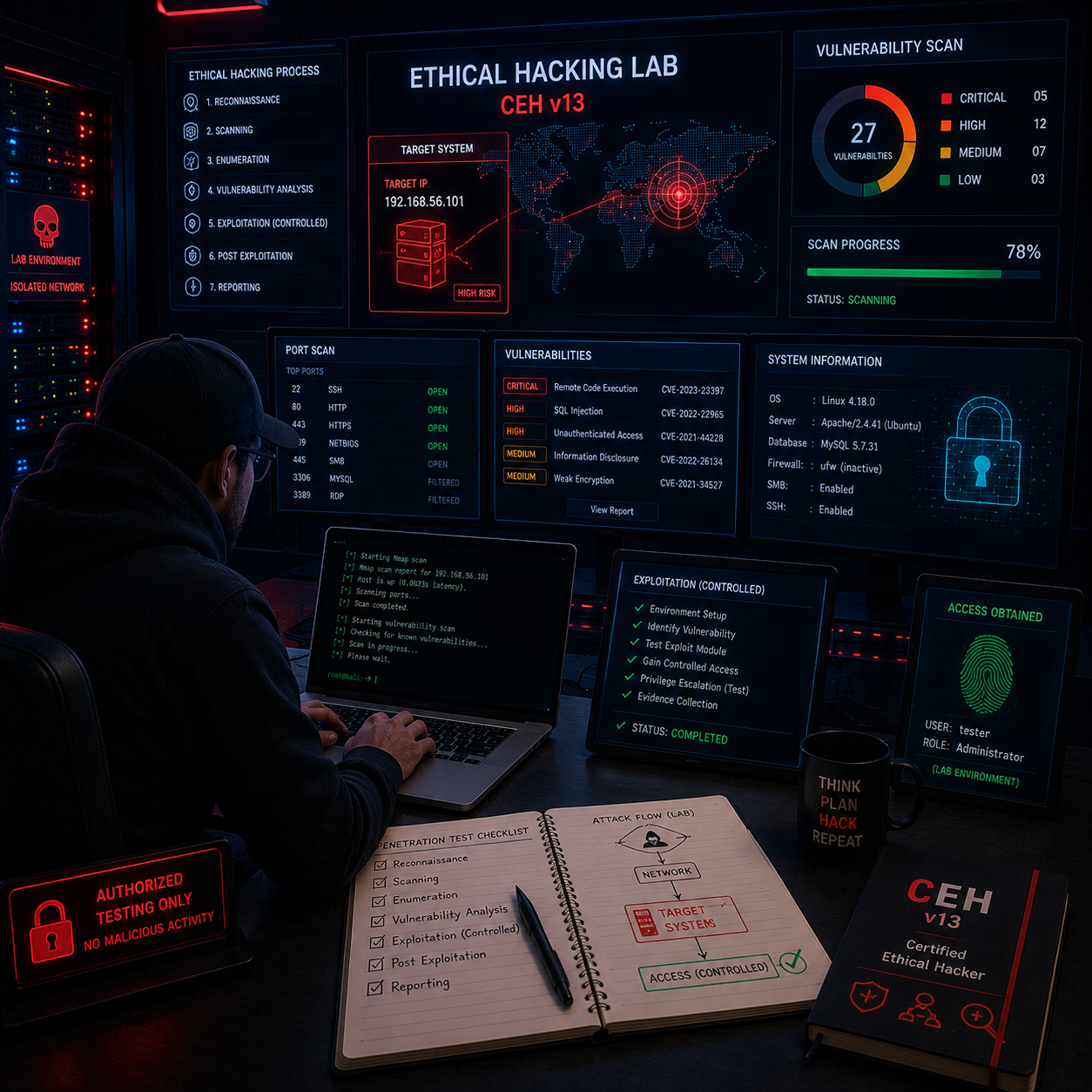
The Certified Ethical Hacker (CEH v13) course is designed to equip IT professionals, cybersecurity aspirants, and ethical hackers with the essential skills to assess, test, and secure modern digital infrastructures. Delivered through in-depth theoretical modules and intensive hands-on labs, this program aligns with the latest cybersecurity threats, tools, and industry practices outlined by EC-Council. Learners will gain the knowledge and practical capability to think like a hacker-and act like a professional security expert.
Whether you're securing enterprise systems, testing application vulnerabilities, or defending against complex attacks, CEH v13 ensures you're prepared to handle real-world cybersecurity challenges.
You are here
Enterprise core
Expert level

Hi, I'm Alex Ovi, a Senior Cybersecurity Engineer with 11+ years of experience in offensive and defensive security. I specialize in penetration testing, threat intelligence, and real-world cybersecurity training.


.png)

Thank you for sharing your experience with LearnerUp IT. Your review will be visible after approval.
LearnerUp delivers training across five specialized departments:
Yes. LearnerUp provides several scholarship-based courses to help students start their IT journey:
Our job-guarantee diploma programs are best suited for: